 KOR
KOR ENG
ENG








Home / Application / Detail page


COVID-19 Total Solution

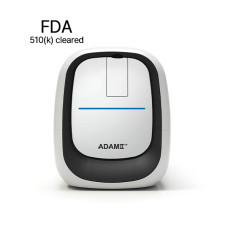
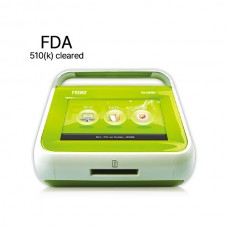
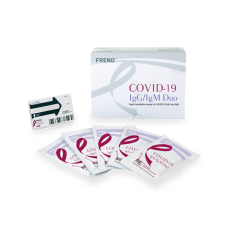
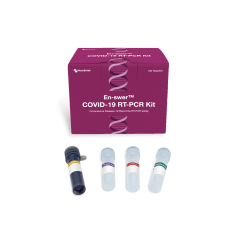
NanoEntek provides a total solution from diagnosis to vaccine development and patient monitoring of COVID-19. En-swer™ COVID-19 RT-PCR Kit detects the presence of SARS-CoV-2 virus itself through real-time reverse-transcription polymerase chain reaction. FREND™ COVID-19 IgG/IgM Duo can be used to check whether patients have developed immune responses to SARS-Cov-2 using human plasma. ADAMII™-CD3/CD4/CD8 counts the T-cells to monitor the immune status of human immunodeficiency that can be used for vaccine development and monitoring for the COVID-19 patients.
Is RT-PCR enough? Is serology test enough? Now add T-cell !

Common Usage of T-Cell Count
Counting the T cell subsets accurately and rapidly is important. The T-cell count has already been used to monitor patients and its importance is increasing in the COVID-19 era. Originally, the T cell count has been used to monitor T-cell responses in immunocompromised patients like AIDS or patients suffering from immunodeficiency (1). For example, CD4 T lymphocytes count is used to determine or consider the need of antiretroviral therapy (ART) for AIDS patients (2). In addition, frequent monitoring of CD4+ T cells is essential to overall monitor the disease progression as well as immune suppression (3).
Allogeneic stem cell transplantation is performed to restore blood cells in cancer patients who have gone through chemotherapy. However, graft-versus-host disease mediated by T cells are major complication causing fatal consequences after allogeneic stem cell transplantation. Several researches have suggested that the high CD3+ graft content was associated with the increased risk of either acute or chronic graft-versus-host disease without any beneficial effect on the disease control (4,5). These studies suggest that the assessment of CD3+graft content may aid in reducing severe GVHD risk without having the negative impact on transplantation outcomes.
Why T- cell count in the post-COVID-19 era?
Understanding how COVID-19 affects our body is essential to fight COVID-19. Researchers are putting effort to reveal how COVID-19 can cause severe respiratory symptoms in human. Zhang et al. has shown that the prominent feature of COVID-19 was progressive lymphocytopenia and notably CD3 T cells were affected the most as well as CD4 and CD8 T cells (6). There were also two different studies which monitored the patients in different conditions using the immunological parameters. When it comes to the ICU patients, the severity of COVID-19 showed inverse relationship with T-cell count (7). However, another study showed that the high number of CD4 and CD8 T cells were found in the COVID-19 patients at the convalescent stages (8). Such studies have highlighted the importance of counting T cells in the COVID-19 era and further researches are required to elucidate the relationship between COVID-19 and CD4 and 8 T cells.
Monitoring T-cell is essential in Vaccine development
The development of COVID-19 vaccine has become inevitable. As vaccine aims to elicit immune responses through CD4 T cells, understanding the dynamics of T-cell is essential in the vaccine development. Currently, more than 152 vaccines are under the development and the spike protein is the major antigen of interest (9). Actual studies were performed to show whether the spike protein elicits specific CD4 T cells or CD8 T cells responses. Grifoni et al. proved that spike protein can specifically elicit specific CD4 T cells which show high correlation with the IgG responses (8). Feng-Cai Zhu et al. published the result of first-in-human trial using adenovirus type-5 vectored COVID-19 vaccine by testing through dose-escalation and monitored up to 28 days (10). It was found that INF-γ+CD4 T and CD8 T cells increased after 14 days.
Then why ADAMII™-CD3/CD4/CD8?
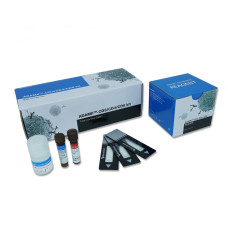
The ADAMII™-CD3/CD4/CD8 identify the absolute counts of human T lymphocytes(CD3+), helper/inducer(CD3+CD4+) T lymphocytes, and suppressor/cytotoxic(CD3+CD8+) T lymphocytes in RBC-lysed whole blood. It targets of T cell responses to SARS-CoV-2 in human, so it can be used for vaccine development and monitoring for the COVID-19 patients.
Save TIME, save MONEY. It's easy to use!
Our ADAMII™-CD3/CD4/CD8 provides absolute T cell counts within 17 minutes and help you to save your time and money. It will support you to better understand about the COVID-19.

It provides accurate absolute number of CD3+/CD4+/CD8+ cells with rapid turnaround and minimal hands-on time for the operator. The high degree of precision of the system is due in part to the simplifying sample preparation steps, elimination of washing and reconstituting steps which may cause cell loss and human error.

Reference
(1) World Health Organization (2017). Guidelines for managing advanced HIV disease and rapid initiation of antiretroviral therapy. https://www.who.int/hiv/pub/arv/arv-2016/en/
(2) World Health Organization, Regional Office for South-East Asia. (2009). Laboratory guidelines for enumeration CD4 T lymphocytes in the context of HIV/AIDS (revised version 2009). WHO Regional Office for South-East Asia. https://apps.who.int/iris/handle/10665/205403
(3) Ramalingam, V.V., Mani, M., Sundaresan, V.C., Karunaiya, R.J., Sachithanandham, J. and Kannangai, R. (2012). Daily Quality Control in CD3+and CD4+T Cell Estimation by the FACS Count System at a Tertiary Care Center in South India. Clinical and Vaccine Immunology, 19(10), pp.1693–1696.
(4) Paz Morante, M., Briones, J., Canto, E., Sabzevari, H., Martino, R., Sierra, J., Rodriguez-Sanchez, J.L. and Vidal, S. (2006). Activation-associated phenotype of CD3+ T cells in acute graft-versus-host disease. Clinical and Experimental Immunology, 145(1), pp.36–43.
(5) Czerw, T., Labopin, M., Schmid, C., Cornelissen, J.J., Chevallier, P., Blaise, D., Kuball, J., Vigouroux, S., Garban, F., Lioure, B., Fegueux, N., Clement, L., Sandstedt, A., Maertens, J., Guillerm, G., Bordessoule, D., Mohty, M. and Nagler, A. (2016). High CD3+ and CD34+ peripheral blood stem cell grafts content is associated with increased risk of graft-versus-host disease without beneficial effect on disease control after reduced-intensity conditioning allogeneic transplantation from matched unrelated donors for acute myeloid leukemia — an analysis from the Acute Leukemia Working Party of the European Society for Blood and Marrow Transplantation. Oncotarget, 7(19), pp.27255–27266.
(6) Zhang, X., Tan, Y., Ling, Y., Lu, G., Liu, F., Yi, Z., Jia, X., Wu, M., Shi, B., Xu, S., Chen, J., Wang, W., Chen, B., Jiang, L., Yu, S., Lu, J., Wang, J., Xu, M., Yuan, Z., Zhang, Q., Zhang, X., Zhao, G., Wang, S., Chen, S. and Lu, H. (2020). Viral and host factors related to the clinical outcome of COVID-19. Nature.
(7) Diao, B., Wang, C., Tan, Y., Chen, X., Liu, Y., Ning, L., Chen, L., Li, M., Liu, Y., Wang, G., Yuan, Z., Feng, Z., Zhang, Y., Wu, Y. and Chen, Y. (2020). Reduction and Functional Exhaustion of T Cells in Patients With Coronavirus Disease 2019 (COVID-19). Frontiers in Immunology, [online] 11. Available at: https://www.ncbi.nlm.nih.gov/pmc/articles/PMC7205903/pdf/fimmu-11-00827.pdf [Accessed 21 Jun. 2020].
(8) Grifoni, A., Weiskopf, D., Ramirez, S.I., Mateus, J., Dan, J.M., Moderbacher, C.R., Rawlings, S.A., Sutherland, A., Premkumar, L., Jadi, R.S., Marrama, D., de Silva, A.M., Frazier, A., Carlin, A., Greenbaum, J.A., Peters, B., Krammer, F., Smith, D.M., Crotty, S. and Sette, A. (2020). Targets of T cell responses to SARS-CoV-2 coronavirus in humans with COVID-19 disease and unexposed individuals. Cell. [online] Available at: https://www.cell.com/cell/pdf/S0092-8674(20)30610-3.pdf [Accessed 22 May 2020].
(9) COVID-19 Vaccine Tracker. (n.d.). COVID-19 Vaccine Tracker. [online] Available at: https://biorender.com/covid-vaccine-tracker.
(10) Zhu, F.-C., Li, Y.-H., Guan, X.-H., Hou, L.-H., Wang, W.-J., Li, J.-X., Wu, S.-P., Wang, B.-S., Wang, Z., Wang, L., Jia, S.-Y., Jiang, H.-D., Wang, L., Jiang, T., Hu, Y., Gou, J.-B., Xu, S.-B., Xu, J.-J., Wang, X.-W., Wang, W. and Chen, W. (2020). Safety, tolerability, and immunogenicity of a recombinant adenovirus type-5 vectored COVID-19 vaccine: a dose-escalation, open-label, non-randomised, first-in-human trial. The Lancet, [online] 0(0).
Available at:https://www.thelancet.com/journals/lancet/article/PIIS0140-6736(20)31208-3/fulltext.